
WELCOME BONUS 300%
UP TO €2000 + 100
FREE SPINS
UP TO €2000 + 100
FREE SPINS
Home → Games
Casino games at Casino-Win
Why the Double Zero Almost Doubles the House Edge
American Roulette features 38 sectors, including both a single zero and a double zero. This increases the house edge to 5.26%, a significant jump from its European counterpart. For example, a straight bet pays 35:1 in both versions.
The addition of the double zero sector directly impacts payout probabilities. While payouts like 35:1 for a straight bet remain the same as European Roulette, the increased number of outcomes means the casino retains a larger portion of wagers over time. This higher edge is a key differentiator.
For the player, this translates to a less favourable return on investment. A €100 wager on American Roulette, over the long run, is expected to yield €94.74 in returns, whereas European Roulette would theoretically return €97.40. This difference is directly attributable to the extra zero.
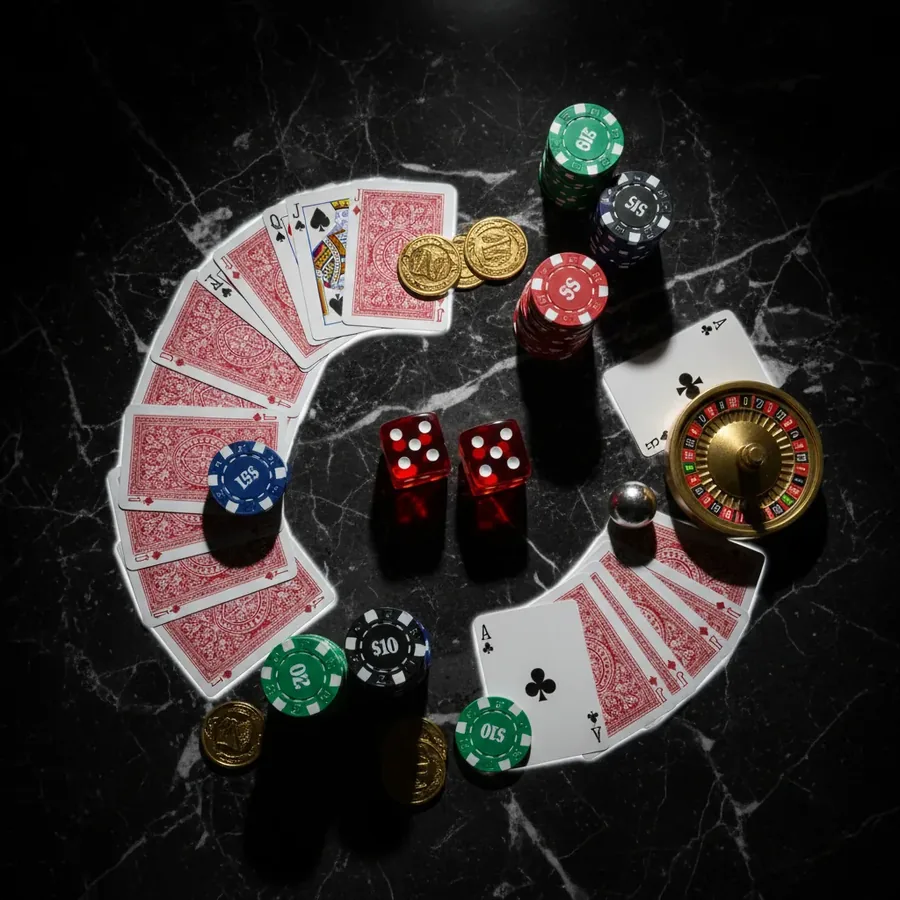
Baccarat in three steps: bet, reveal, compare
Baccarat Player bets offer a return to player of 98.76%, with a house advantage of 1.24%. This bet pays 1:1, meaning a €10 bet returns €10 profit. It is a popular choice due to its relatively low house edge.
The Banker bet, while also paying 1:1, is subject to a commission which makes it slightly more profitable for the casino in the long run, despite the Player bet having a slightly lower edge. The Tie bet, however, presents a much higher house edge.
A Baccarat Tie bet, with a payout of 8:1, has a significantly higher house edge of 14.36% and a RTP of 85.64%, making it a statistically poor choice for players aiming for longevity at the table. This contrasts sharply with the Player and Banker bets.
Plein Pays 35:1, Cheval Pays 17:1
In French Roulette with the La Partage rule, even-money bets like Red/Black, Odd/Even, and Low/High are subject to a refund of half the stake when the ball lands on zero. This rule reduces the house edge on these specific bets to 1.35%.
The RTP for these even-money bets under La Partage is 98.65%, offering a significantly better player experience compared to other roulette variants. For instance, American Roulette, with its double zero, has a RTP of 94.74% on similar bets.
Straight bets on a single number in Roulette, without the La Partage rule, still offer a substantial payout of 35:1. However, the absence of the La Partage rule on such inside bets means the house edge remains higher than on the even-money options.
37 vs. 38 Sectors: One Zero Difference
European Roulette, with its 37 sectors including a single zero, offers a lower house edge compared to American Roulette. The RTP on even-money bets in European Roulette with La Partage is 98.65%, providing a more favourable outcome for players.
The distinction of 37 sectors versus 38 in roulette directly impacts the house's advantage. A single zero layout means fewer outcomes where the casino wins outright on even-money bets, thus lowering the overall house edge to 1.35% for certain wagers.
This difference of one zero sector is crucial for players seeking better odds. While a straight bet pays 35:1 on both types of roulette, the increased probability of the house winning on American Roulette due to the double zero is a significant disadvantage.
Submit documents no older than three months
Casino-Win requires documents for verification that are no older than three months. This is a standard procedure to ensure the security and legitimacy of transactions, aligning with industry best practices. Such checks are typically part of the Know Your Customer (KYC) process.
Providing up-to-date documentation helps facilitate smoother and faster withdrawals. For example, if a player requests a payout, having recent proof of identity and address readily available can expedite the process, preventing delays that might occur with older documents.
This requirement ensures that the player's information is current and accurate, safeguarding against potential fraud. Adhering to this timeframe for document submission is essential for maintaining account integrity and ensuring eligibility for all services offered by the casino.
Game categories at a glance
| Category | Examples | Stakes From | Highlight |
|---|---|---|---|
| Slots | Chaos Crew, Thunderstruck II, Gates of Olympus | 0,10 EUR | thousands of titles |
| Table games | Roulette, Blackjack, Baccarat | 0,50 EUR | classic rules |
| Live casino | Lightning Roulette, Blackjack Party | 0,20 EUR | real dealers |
| Jackpot games | Mega Moolah, Divine Fortune, Age of the Gods | 0,20 EUR | progressive pools |
| Instant games | Aviator, Plinko, Mines | 0,10 EUR | fast rounds |
| Video poker | Jacks or Better, Deuces Wild | 0,25 EUR | strategy based |
6 Decks vs. 8 Decks in House Edge
Reducing the number of decks in Blackjack from 8 to 6 can slightly decrease the house edge. A change from 8 decks to 6 decks can alter the house edge by approximately 0.02 percentage points. This means that for every €100 wagered, the casino's average retention is marginally reduced.
When comparing different Blackjack variations, the number of decks is a significant factor. For instance, Blackjack with 8 decks typically has a house edge of around 0.20% greater than a single-deck game, all other rules being equal. This difference highlights the impact of deck count on the game's fairness.
For players aiming to minimize the house edge, opting for games with fewer decks is generally beneficial. While the 0.02 percentage point difference between 6 and 8 decks might seem small, over extended play, it can contribute to a slightly better player outcome. This is a practical consideration for diligent players.
Multihand Blackjack with Up to 5 Hands
Multihand Blackjack allows players to engage with up to 5 hands simultaneously. This format can increase the pace of play and the number of decisions a player makes per hour. The strategic element remains, but the volume of action is amplified, potentially leading to quicker swings in results.
When playing Blackjack with multiple hands, such as up to 5, the house edge remains constant for each individual hand based on the game's rules. For example, classic Blackjack with 3:2 payouts has a house edge of 0.15%. Playing more hands does not inherently change this fundamental edge per hand.
The primary consequence for the player engaging with up to 5 hands is an increased exposure to variance. While the house edge per hand is consistent, playing more hands means more potential outcomes are realized in a shorter timeframe. This can lead to larger wins or losses compared to single-hand play.
Blackjack flow: cards, decision, payout 3:2
The flow of a Blackjack hand involves the distribution of cards, player decisions, and the subsequent payout if successful. A player receives two cards, followed by the dealer's upcard, after which the player decides to hit, stand, double, split, or surrender.
A key payout in Blackjack is the 3:2 for a natural Blackjack, which occurs when the first two cards dealt total 21 (an Ace and a ten-value card). For a €10 bet, this results in a payout of €15, compared to the standard 1:1 payout for other winning hands.
The house edge for Blackjack with classic rules and a 3:2 payout is remarkably low at 0.15%. This figure represents the average percentage of each bet that the casino expects to retain over the long term, making it a favourable game for strategic players.
La Partage applies only to even money bets
The La Partage rule, when active in French Roulette, specifically applies to even money bets. This means that bets such as Red/Black, Odd/Even, and Low/High are affected by the rule. Bets on individual numbers or other inside bets do not benefit from La Partage.
When the ball lands on zero during French Roulette with La Partage, half of the stake on even money bets is returned to the player. For example, a €20 bet on Red would result in a €10 refund if zero is the outcome, significantly reducing the house edge on these specific wagers.
The house advantage on even money bets in French Roulette with La Partage is reduced to 1.35%. This is a substantial improvement compared to American Roulette, which has a house edge of 5.26% due to the double zero. The implementation of La Partage makes these bets more player-friendly.
Video Poker 9/6: What the Two Numbers Mean
In Video Poker, the '9/6' designation refers to the payout ratios for two specific hands: a Full House and a Flush. In a 9/6 Jacks or Better game, a Full House pays 9 coins for every 1 coin wagered, and a Flush pays 6 coins for every 1 coin wagered.
This 9/6 payout structure is considered a 'Full Pay' version of Jacks or Better Video Poker, offering a high Return to Player (RTP) of 99.54%. This RTP means that, theoretically, over a very large number of hands, the player can expect to get back 99.54% of their total wagers.
The house edge for Video Poker Jacks or Better 9/6 is 0.46%. This low house edge, combined with optimal strategy, makes it one of the most player-advantageous games available. The difference between a 9/6 payout and a less favourable 8/5 payout (97.29% RTP) can result in a 2.25% loss in RTP.
Connection Lost in Table Game: Round Continues Automatically
In the event of a connection interruption during table game play, the round will continue automatically. This ensures that no wagers are lost due to technical issues, maintaining fairness for the player. For instance, in Craps with Free Odds, bets are settled according to standard rules even if the player's connection drops temporarily. The system automatically processes outcomes based on the established game rules, ensuring fair play.
This automated continuation is a standard feature designed to safeguard player funds and game integrity. For example, a Blackjack hand will be played out according to optimal strategy if the player disconnects after placing their initial bet. The outcome is then determined and credited to the player’s account. This mechanism prevents situations where a player might miss out on a winning hand or be unfairly penalized for a dropped connection.
This ensures continuity and fairness, especially in games with dynamic betting structures. For Craps Free Odds, the system will continue to process bets and calculate payouts based on dice rolls even if the player is temporarily offline. Such automatic processing is crucial for maintaining player confidence and ensuring a consistent gaming experience across all table games offered.
Straight 35:1 Against the Chance of 1 in 37
In American Roulette, a straight bet on a single number pays 35:1, reflecting the odds of hitting that number on a wheel with 38 sectors. This payout structure is standard, meaning a €10 bet would yield €350 in winnings, plus the original stake. The house edge on this bet is 5.26%, calculated from the difference between the true odds and the payout.
Compared to European Roulette, which has only 37 sectors (0-36), American Roulette's double zero (00) significantly increases the house advantage. A straight bet on the European wheel, with odds of 1 in 37, also pays 35:1 but has a lower house edge of 2.70%. This difference highlights the impact of the extra sector on payout potential.
This disparity means players face a higher statistical disadvantage in American Roulette for single-number bets. For example, over many bets, the casino expects to retain €5.26 for every €100 wagered on straight bets. This contrasts with European Roulette, where the expected retention is €2.70 per €100 wagered on the same bet type.
Corner Pays 8:1, Dozen Only 2:1
In American Roulette, a corner bet covering four numbers pays 8:1, offering a different risk-reward profile than other wagers. For instance, a €10 corner bet would result in €80 winnings, plus the €10 stake. This bet type contributes to the overall 5.26% house edge inherent in American Roulette.
Conversely, a dozen bet in American Roulette, covering 12 numbers, pays at odds of 2:1. This significantly lower payout ratio reflects the broader coverage of numbers. A €10 dozen bet would return €20 in winnings, alongside the original stake. This bet also operates within the 5.26% house advantage framework.
The discrepancy in payout ratios for corner bets (8:1) versus dozen bets (2:1) demonstrates how different bet types are structured within the same game's rules. While both are subject to the American Roulette house edge, the potential return on investment varies considerably based on the number of outcomes covered by the wager.
Baccarat commission: 5 percent on each Banker win
In Baccarat, the commission on Banker wins is typically set at 5 percent, a standard practice that influences the game's overall house edge. For example, a €100 bet on the Banker that wins would result in a €95 payout, with €5 deducted as commission. This rule is crucial for understanding the game's profitability for the casino.
This 5% commission on Banker wins is a key differentiator from Player bets, which usually pay 1:1 without any deductions. While the Banker bet is statistically more likely to win, the commission effectively balances this advantage. For instance, a €100 Player bet win returns €100, whereas a €100 Banker bet win returns €95.
The Banker commission ensures the casino maintains a consistent edge, even on the most frequently winning bet. For example, in an 8-deck Baccarat game, the Player bet has a 1.24% house edge, while the Banker bet, after the 5% commission, results in a slightly lower house edge of approximately 1.06%. This commission is fundamental to the game's mathematical structure.
Table Games Often Count Only 10 Percent
When a welcome bonus is active, table games such as Blackjack and Baccarat often contribute only 10% towards fulfilling the wagering requirements. This means that for every €100 wagered on these games, only €10 counts towards the total turnover needed to release bonus funds. For example, a player aiming to clear a €2,000 bonus with 40x wagering would need to wager €80,000 in total.
With a 10% contribution rate from table games, a player would need to wager significantly more on these games to achieve the required turnover compared to slots. To wager €80,000 on table games, a player would need to place €800,000 in bets at a 10% contribution rate. This substantial difference impacts bonus clearing strategies.
This 10% contribution rate is a common term across many online casinos, designed to balance the lower house edge of table games against the higher contribution rate of slots (often 100%). Therefore, players focusing on bonus wagering may find it more efficient to play slots to meet the turnover demands, as €80,000 wagered on slots would fulfill the €80,000 requirement directly.
Contact
Live - online chat
Banking






Providers












Win Casino 2026